What is an Infographic? The Ultimate Guide to Visual Storytelling 2026
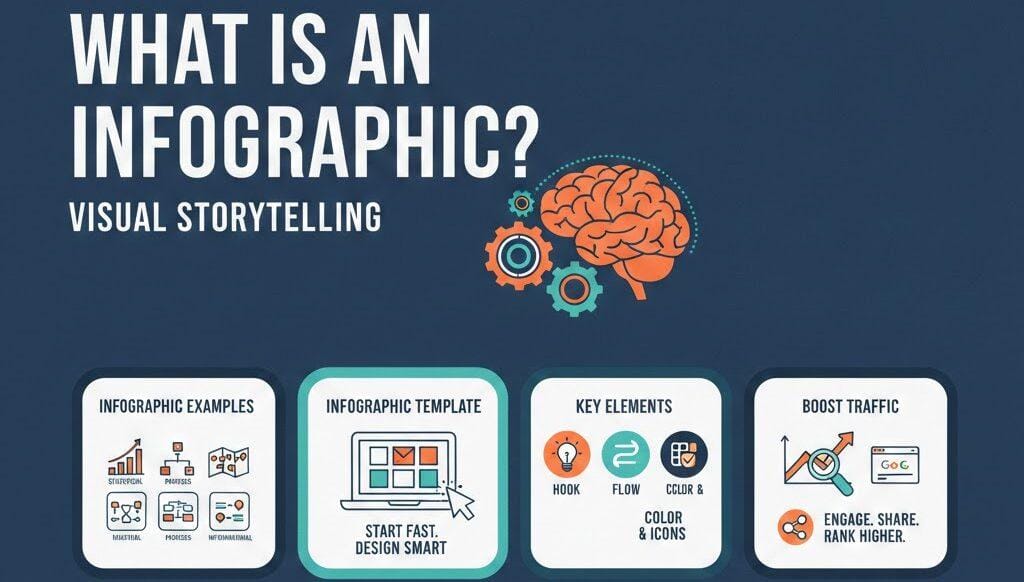
The Magic of Visual Learning: Your Complete Guide
Have you ever tried to read a massive wall of text and felt your eyes glaze over? We have all been there. In our fast-paced world, people want information quickly, and they want it to look beautiful. This is where the power of visual communication comes into play. If you are wondering what is an infographic, you are in the right place to find out. These visual tools are the secret weapon for anyone trying to explain complex ideas without putting their audience to sleep. Think of them as a bridge between boring data and exciting stories that anyone can understand at a single glance.
Visuals are processed by the human brain much faster than plain words. When you use an infographic, you are helping your readers learn more in less time. Whether you are a student, a business owner, or just someone who loves sharing cool facts, mastering this format is a game-changer. Throughout this guide, we will explore why these graphics are so popular and how you can start using an infographic template to create your own masterpieces. Let’s dive into the vibrant world of shapes, colors, and data to see how they can transform your communication strategy into something truly spectacular.
What is an Infographic and Why Does It Matter?
To put it simply, an infographic is a collection of imagery, charts, and minimal text that gives an easy-to-understand overview of a topic. The goal is to take a difficult subject and break it down into bite-sized, visual pieces. When people ask what is an infographic, they are usually looking for a way to make their data more engaging. Instead of a long report, you get a bright, colorful image that tells the whole story. This makes it perfect for sharing on social media or using in a professional presentation where you need to grab attention fast.
The importance of these visuals cannot be overstated in our modern digital age. We are constantly bombarded with information, so we need a way to filter the noise. A well-designed infographic acts as a filter, highlighting the most important facts so the reader doesn’t have to hunt for them. By using a clear infographic template, even someone without a design degree can create a professional look. This accessibility is why they have become a staple in education, marketing, and journalism. They turn “hard to read” into “fun to look at” instantly.
Detailed Comparison: Data vs. Infographics
| Feature | Raw Data/Text | Professional Infographic |
| Speed of Understanding | Slow (requires deep reading) | Instant (visual recognition) |
| Engagement Level | Low (can be boring) | High (vibrant and catchy) |
| Retention Rate | People forget 80% quickly | People remember 65% longer |
| Social Shareability | Very low | Extremely high |
| Best Used For | Detailed research papers | Social media, blogs, & ads |
Exploring Different Infographic Examples for Success
One of the best ways to learn is by looking at infographic examples that already work well. There isn’t just one type of graphic; they come in many styles depending on what you want to say. For instance, a “Statistical Infographic” focuses heavily on numbers and charts to prove a point. On the other hand, an “Informational Infographic” might use more text and icons to explain a new concept. Seeing these various infographic examples helps you realize that the only limit is your imagination when it comes to visual storytelling.
Another popular style is the “Process Infographic,” which works like a map or a recipe. It shows a step-by-step journey from start to finish. If you look at high-quality infographic examples, you will notice they all have a clear flow that leads the eye from one point to the next. This logical progression is key to making sure your message isn’t lost in the design. By studying what others have done, you can find inspiration for your own projects and understand what is an infographic at a much deeper, more practical level.
How to Choose the Perfect Infographic Template
Starting from a blank white screen can be very scary for most people. That is why using an infographic template is such a smart move for beginners and pros alike. A template gives you a solid foundation with pre-set colors, fonts, and layouts that already look great. When you search for what is an infographic layout that works, you will find thousands of options online. The trick is choosing one that matches your specific goal. If you have lots of numbers, pick a template with plenty of charts and bars.
If you are telling a story about a timeline, look for an infographic template that features a long vertical line or a winding path. Using a template doesn’t mean your work won’t be unique. You can change the icons, swap the colors to match your brand, and put in your own specific data. It saves hours of time and ensures that the final product looks polished and professional. It is the easiest way to ensure your infographic stands out in a crowded feed while maintaining a clean and organized structure for your readers.
The Essential Elements of a Great Design
Every amazing infographic shares a few common traits that make it successful. First, it needs a “Hook,” which is usually a bold headline that tells the reader exactly what they are going to learn. Second, it needs “Flow.” This means the design should guide the reader’s eyes naturally from the top to the bottom. When people ask what is an infographic supposed to look like, the answer is always “organized.” If the page is too cluttered, the reader will get overwhelmed and stop looking, which is the last thing you want.
Color and contrast are also vital parts of the puzzle. You want to use colors that pop but don’t hurt the eyes. Using icons instead of big blocks of text is another hallmark of a great infographic. Icons act as visual shorthand, allowing you to convey an idea without writing a single word. Finally, always include your sources at the bottom. This builds trust and shows that your infographic is based on real, verifiable facts. This combination of beauty and accuracy is what makes visual content so powerful for any audience.
Why Your Business Needs Visual Content Now
If you are running a business, understanding what is an infographic can be the difference between being ignored and going viral. Customers are more likely to engage with a brand that provides value in an easy-to-digest format. An infographic can explain how your product works, why your service is better than the competition, or even share industry trends. It positions you as an expert who cares about the reader’s time. Plus, people love to share cool graphics on sites like Pinterest, LinkedIn, and X (Twitter).
When you share an infographic, you are essentially giving your audience a gift of knowledge. This builds a positive relationship and keeps your brand at the top of their minds. By utilizing a consistent infographic template for your monthly reports or social updates, you create a recognizable “look” for your company. This brand consistency is huge for building long-term trust. In a world where everyone is shouting for attention, a clean and helpful infographic speaks much louder than a noisy advertisement or a boring sales pitch.
Simplifying Complex Data with Visuals
Data can be very intimidating, especially if it involves big numbers or scientific concepts. However, an infographic can make even the most boring statistics look exciting. By turning a spreadsheet into a colorful pie chart or a bar graph, you make the data relatable. People don’t just want to see numbers; they want to see what those numbers mean for their lives. This is the core of what is an infographic—it is a tool for translation. It translates “math” into “meaning” through the use of clever design and simple layouts.
Imagine trying to explain global climate change using only a list of temperatures. Now imagine an infographic showing a melting ice cube and a rising thermometer. The visual version is much more impactful and emotional. This is why many non-profits and educational groups use an infographic template to spread their messages. It breaks down barriers of language and education, making information accessible to everyone, regardless of their background. It’s about democratizing information so that everyone can stay informed and empowered in their daily lives.
Steps to Creating Your Own Infographic
Creating your first visual doesn’t have to be a mountain to climb. First, you need to gather your data and decide on your main message. Once you have your “story,” you should look at some infographic examples to see which style fits your data best. Next, choose a user-friendly infographic template from a site like Canva or Adobe Express. This will give you the skeleton of your project. Then, start filling in your facts and replacing the placeholder text with your own unique insights and research findings.
As you build your infographic, remember to keep it simple. Less is often more when it comes to design. Don’t be afraid of “white space”—the empty areas around your icons and text. This space helps the reader’s eyes rest and makes the important parts stand out even more. Once you are finished, ask a friend to look at it for ten seconds. If they can tell you what it’s about after that short time, you’ve answered what is an infographic correctly through your work. It’s all about fast, clear, and beautiful communication.
Common Mistakes to Avoid in Design
Even with a great infographic template, it is easy to make mistakes that ruin the experience for the reader. The biggest mistake is “Overcrowding.” If you try to fit too much information into one image, it becomes a mess. Another common error is using too many different fonts. Stick to two or three fonts at most to keep things looking clean. When people ask what is an infographic fail, it’s usually one that looks like a chaotic rainbow. Color is great, but it needs to be used with a specific purpose in mind.
Another pitfall is forgetting the “Mobile User.” Most people will view your infographic on their phones, so the text needs to be large enough to read on a small screen. If your graphic is too thin or the font is tiny, they will just keep scrolling. Always check your infographic examples on a mobile device before you hit the publish button. Lastly, make sure your data is accurate. A beautiful graphic with wrong information will hurt your reputation. Always double-check your facts to ensure you are providing real value to your audience.
Boosting Your Online Presence with Visuals
If you want to rank higher on search engines and get more visitors to your website, you need to understand what is an infographic can do for your traffic. Search engines love content that keeps people on the page longer. Because graphics are engaging, people spend more time looking at them, which tells search engines your site is high-quality. Additionally, other websites might want to link to your infographic if it provides great value. This creates “backlinks,” which are like gold for your online visibility and authority.
You can also break your large infographic into smaller “micro-graphics” for social media. This gives you multiple pieces of content from just one project. For example, if you used a template for an infographic about “Healthy Eating,” you could take one small chart from it and post it on Instagram. This strategy keeps your feed active and drives people back to your main website to see the full version. It is a smart, efficient way to handle content creation without burning out or running out of fresh ideas.
Frequently Asked Questions (FAQs)
1. What is an infographic exactly?
An infographic is a visual representation of information or data. It combines images, icons, and short text to explain a topic quickly and clearly. Its main goal is to make complex ideas easy to digest for any reader.
2. Can I make one if I am not an artist?
Yes, absolutely! You can use an infographic template on many free websites. These tools allow you to drag and drop elements, change colors, and add your own text without needing any professional design skills or expensive software.
3. Where can I find good infographic examples?
Websites like Pinterest, Behance, and Canva are full of amazing infographic examples. Looking at these can give you great ideas for layouts, color schemes, and ways to present your specific data.
4. How long should an infographic be?
There is no set rule, but most are vertical and about 800 to 1200 pixels wide. The length depends on how much information you have. However, it’s best to keep it concise so the reader doesn’t get tired of scrolling.
5. Why are infographics better than articles?
They aren’t necessarily “better,” but they are “faster.” An infographic allows a person to understand the “big picture” in seconds, whereas an article takes minutes to read. They are great for grabbing attention in a busy world.
6. Are infographics still popular in 2026?
Yes! In fact, they are more popular than ever. With the rise of visual-heavy platforms and shorter attention spans, the need for clear, fast visual communication continues to grow every year.
Conclusion: Start Creating Your Visual Story
We have covered a lot of ground today! From understanding what is an infographic to exploring various infographic examples, you now have the knowledge to start your own visual journey. Remember, the goal of any great graphic is to help your audience learn something new in the most enjoyable way possible. By using a professional infographic template, you can save time while still producing high-quality content that people will love to share and talk about.
Visual storytelling is a superpower in the digital age. It allows you to connect with people across the globe, regardless of their language or background. So, why wait? Take your data, find a style that speaks to you, and create something beautiful today. Your audience is waiting for content that is easy to read and lovely to look at. Transform your ideas into icons and your data into dreams.
You may also like to read : (Tips Decoradyardi)